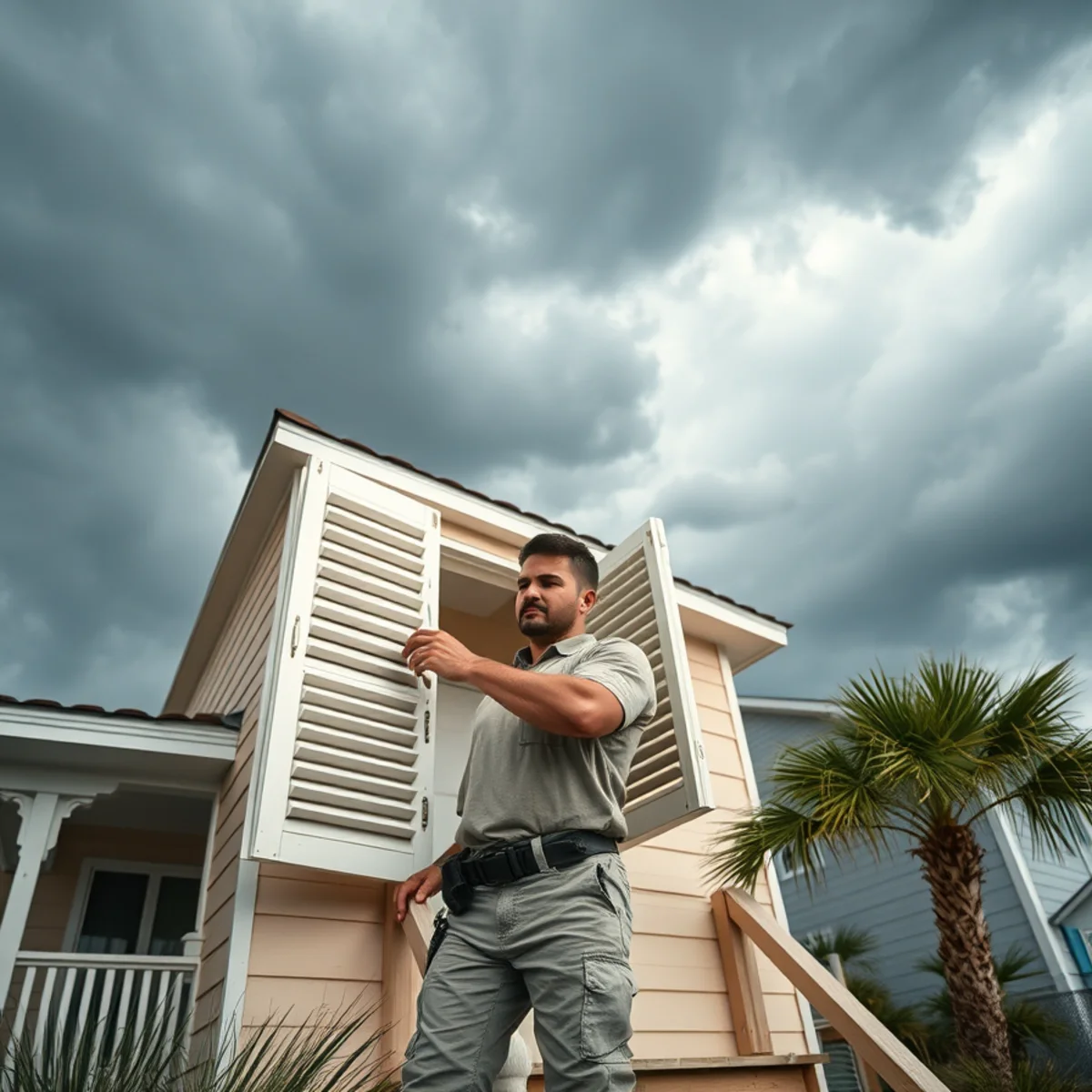
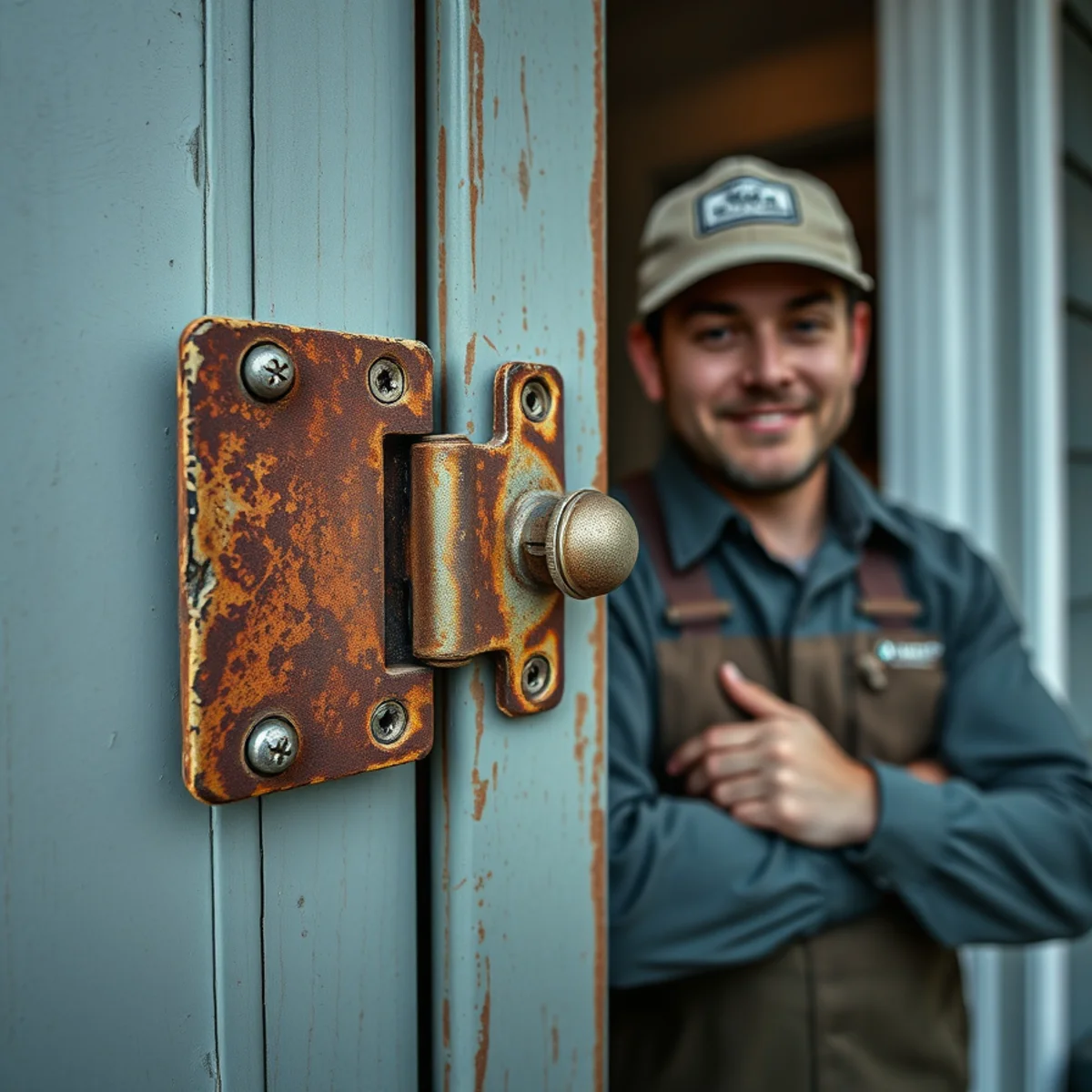
Salt air is the quiet tax every 30A homeowner pays, and it attacks exterior metal faster than almost anything else, corroding hinges, fasteners, fixtures, and AC coils through chloride and galvanic action. The defense is not exotic: rinse hardware with fresh water often, upgrade to 316 stainless and brass, and catch rust early. Here is the full playbook.
You do not see it working, but it is always working. A door hinge that would last decades in Atlanta can bleed rust down a jamb here in a couple of years. After years of fixing coastal homes from the dunes to the bay, we can tell you what fails first, why it fails, and how to slow it down without replacing everything you own.
Why salt air is so hard on your hardware
Two things are eating your metal, and it helps to know both.
Chloride corrosion is the big one. Airborne salt carries chloride ions that break down the protective layer on steel and lower-grade stainless, then pit and rust the metal underneath. Wind off the Gulf drives that salt onto and into everything, and it does not need rain to land.
Galvanic corrosion is the sneaky one. Put two different metals in contact with a little salt moisture between them, like a steel screw in an aluminum fixture, and you have built a tiny battery. The less noble metal corrodes fast. That is why a fixture can look fine while the fasteners holding it up quietly rot away.
Humidity makes both worse by keeping surfaces damp long enough for the reaction to keep going. On the coast, the two rarely take a day off.
What fails first on a 30A home
In our experience, the damage shows up in a predictable order:
- Exterior hinges, locks, and deadbolts. Moving parts seize, keys get stubborn, and cheap finishes bubble and streak.
- Fasteners and screws. The stuff holding railings, shutters, and fixtures together often fails before the thing it holds.
- Light fixtures and house numbers. Coastal-grade looks good on day one, but builder-grade zinc and steel pit within a season or two.
- Garage door hardware. Rollers, tracks, hinges, and especially torsion springs rust and grow noisy, then snap at the worst time.
- Outdoor kitchens. Drawer slides, burners, and cabinet screws corrode fast if they are not true marine grade.
- AC condenser coils. Salt attacks the aluminum fins and copper, cutting efficiency and shortening the life of an expensive unit.
Which homes pay the tax fastest
Salt exposure is not the same everywhere on 30A, and knowing where you sit tells you how hard to work at defense.
- Gulf-front and first-dune homes take direct, salt-laden wind off the water with nothing to slow it. Hardware here can corrode two to three times faster than the same parts a few streets north, so these homes earn the weekly rinse.
- Homes a few blocks back still breathe salt air, especially on the upper floors and the south-facing side, but tree cover and neighboring buildings knock the load down. A rinse every couple of weeks usually keeps up.
- Bay and dune-lake sides trade some Gulf salt for high humidity and standing damp, which drives the same corrosion more slowly but rots wood and grows mildew faster.
Wherever you sit, a periodic soft wash of the exterior rinses the salt film and mildew off siding, soffits, and railings that a garden hose never fully reaches.
Marine-grade stainless vs. powder-coat: what to actually buy
When you replace corroded parts, buy once and buy right.
- 316 stainless steel is the coastal standard. It holds up to chloride far better than the common 304 stainless you will find on most shelves. If a supplier cannot confirm it is 316, assume it is not.
- Powder-coated aluminum or steel resists salt well as long as the coating stays intact. One deep scratch to bare metal, though, and corrosion creeps under the finish. Touch up chips early.
- Solid brass and bronze age gracefully near the water and are a smart choice for exterior locksets and lighting.
- Avoid plain zinc, chrome-over-pot-metal, and mystery-grade fasteners. They are cheaper for a reason.
The same logic applies to coatings on wood and metal. A quality exterior paint or clear coat is a sacrificial shield, which is why smart exterior painting on the Emerald Coast uses coastal-rated products and gets refreshed on schedule rather than run to failure.
The rinse-and-wax routine that buys you years
The cheapest corrosion tool you own is a garden hose. Salt only does damage while it sits on the surface.
- Rinse exposed hardware with fresh water every week or two, more if you are on a front row of dunes taking direct Gulf wind. Hit locks, hinges, light fixtures, railings, and the AC unit.
- Dry and protect the moving metal. A light coat of paste wax on fixtures and a proper dry lubricant in locks and hinges push moisture off. Skip heavy oils that attract grit.
- Lubricate garage and door hardware a few times a year so rollers, tracks, and latches keep moving instead of grinding.
Ten minutes with a hose beats a hardware replacement every time.
The mistakes that speed corrosion up
Most of the salt damage we are called to fix was made worse by a well-meaning shortcut. A few honest tradeoffs worth knowing:
- Reaching for penetrating oil as a cure-all. A light spray frees a stuck lock today, but heavy oil attracts grit and salt and gums the mechanism over time. A dry, wax-based lubricant sheds moisture without collecting grime.
- Painting or sealing over active rust. Coating rust just traps it, and it keeps spreading underneath. The corrosion has to be cleaned back to sound metal first, or the fresh finish fails in months.
- Trusting a shiny finish. Chrome-over-pot-metal and unmarked fasteners look like stainless on the shelf and pit within a season. If the package cannot confirm 316, treat it as builder-grade.
- Ignoring the small streak. A rust weep from one screw is cheap to fix now and expensive once it has stained stucco or dropped a railing.
Your once-a-year salt-air inspection
Once a year, walk the house and look closely for early warning signs:
- Rust streaks running from screw heads, hinges, or fixtures
- Sticking deadbolts, sliders, and windows that used to glide
- Bubbling paint or a chalky film on metal surfaces
- A noisy or jerky garage door
- Corrosion or heavy salt crust on the AC coils
Catch these early and most are simple, affordable fixes. Let them run and a seized lock becomes a busted door, or a rusted fastener drops a railing. This is a big part of our door and window hardware repair work, and the wiring behind corroded fixtures and outlets is exactly where careful minor electrical repairs matter, since salt-damaged connections are a real fire and failure risk. For the full year-round plan, see our coastal home maintenance checklist.
Salt does not care whether you are on the high dunes of Blue Mountain Beach or out at the dune lakes of Dune Allen Beach. The homes taking the most direct Gulf wind simply pay the tax faster.
Not sure how far the corrosion has already gone? Call us at (877) 753-5021 for a free estimate. We will inspect the hardware, fixtures, and coatings salt hits first and tell you honestly what to rinse, protect, or replace.