Green streaks running down the shaded side of the house. A driveway gone gray with grime. Pavers and a pool deck slick with algae that turns dangerous the moment they get wet. This close to the Gulf, salt film, mildew, and algae build faster than most owners expect, and left alone they stain surfaces and wear them down. A proper wash strips years of buildup in an afternoon and makes a tired exterior look maintained again. Our pressure washing in Santa Rosa Beach cleans driveways, pavers, pool decks, siding, and fences, using the right pressure and the right method for each surface.
Signs it is time for a wash
You can usually see when a surface has had enough. Reach out when you notice:
- Green or black streaks running down siding, soffits, and the shaded north wall.
- A gray driveway or walkway dulled by algae, pollen, and grime, or marked with oil and rust.
- A slippery deck or pool cage where biofilm has made the surface unsafe the moment it gets wet.
- White, chalky efflorescence bleeding through pavers, block, or stucco.
- Before you paint, since coatings will not bond over salt film, chalk, and mildew.
- Before peak rental season or a listing, when curb appeal counts most.
What we clean, and what builds up on it
Coastal grime is not just dirt. It is a mix of salt, organic growth, and pollen that clings to every outdoor surface. We clean:
- Driveways and walkways. Concrete darkened by algae, oil, and tire marks brought back to an even tone.
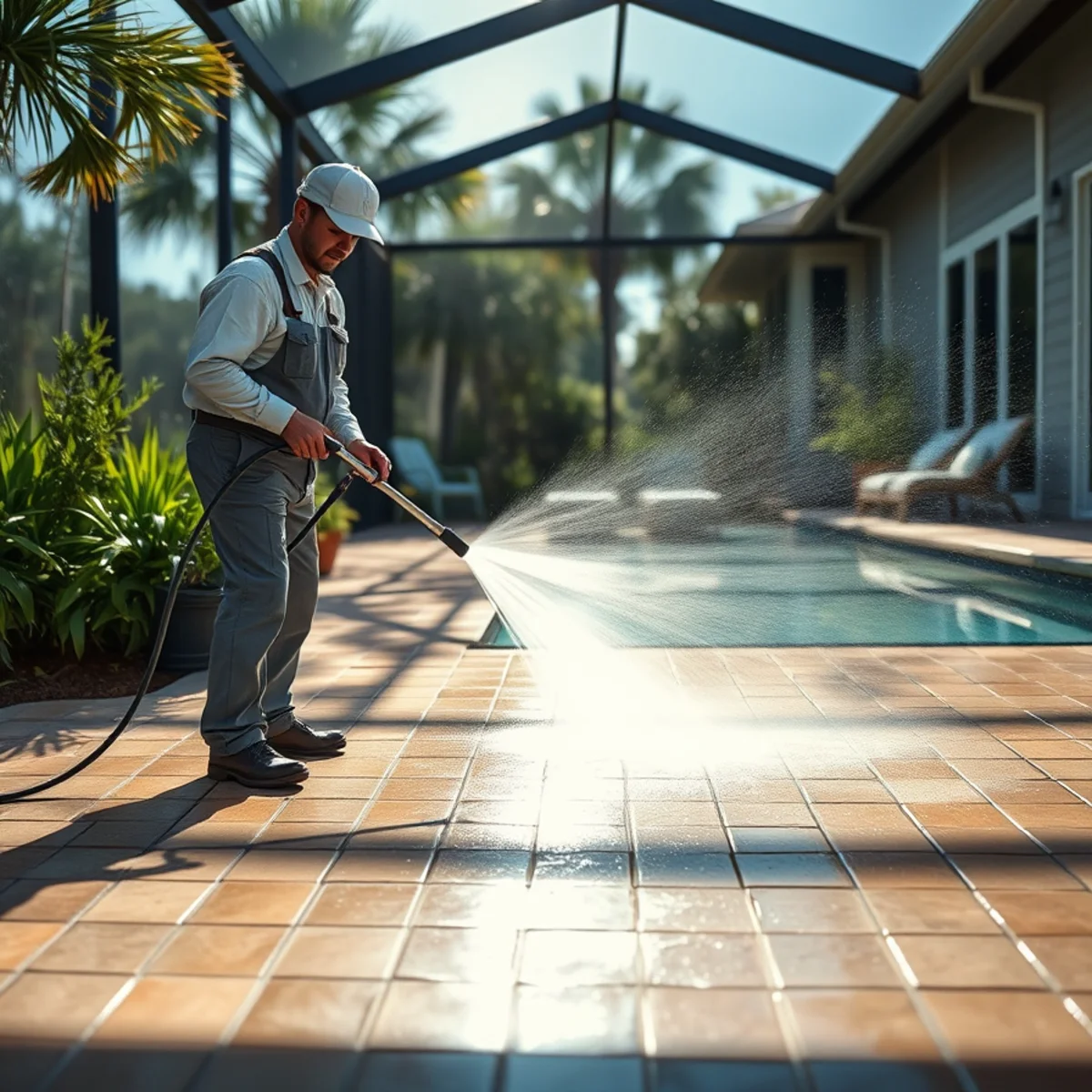
- Pavers and pool decks. Slippery biofilm lifted so the surface is safe underfoot and the color shows again.
- Siding and stucco. Salt film and mildew washed off vinyl, fiber cement, wood, and stucco without forcing water behind them.
- Fences and gates. Wood and vinyl greened by shade and humidity restored.
- Screened enclosures and soffits. The shaded spots where mildew takes hold first.
Soft washing versus high pressure
The biggest mistake we see is too much pressure on the wrong surface. Blasting siding, screens, or old wood at full power drives water where it should not go and can gouge the material. The answer is matching method to surface:
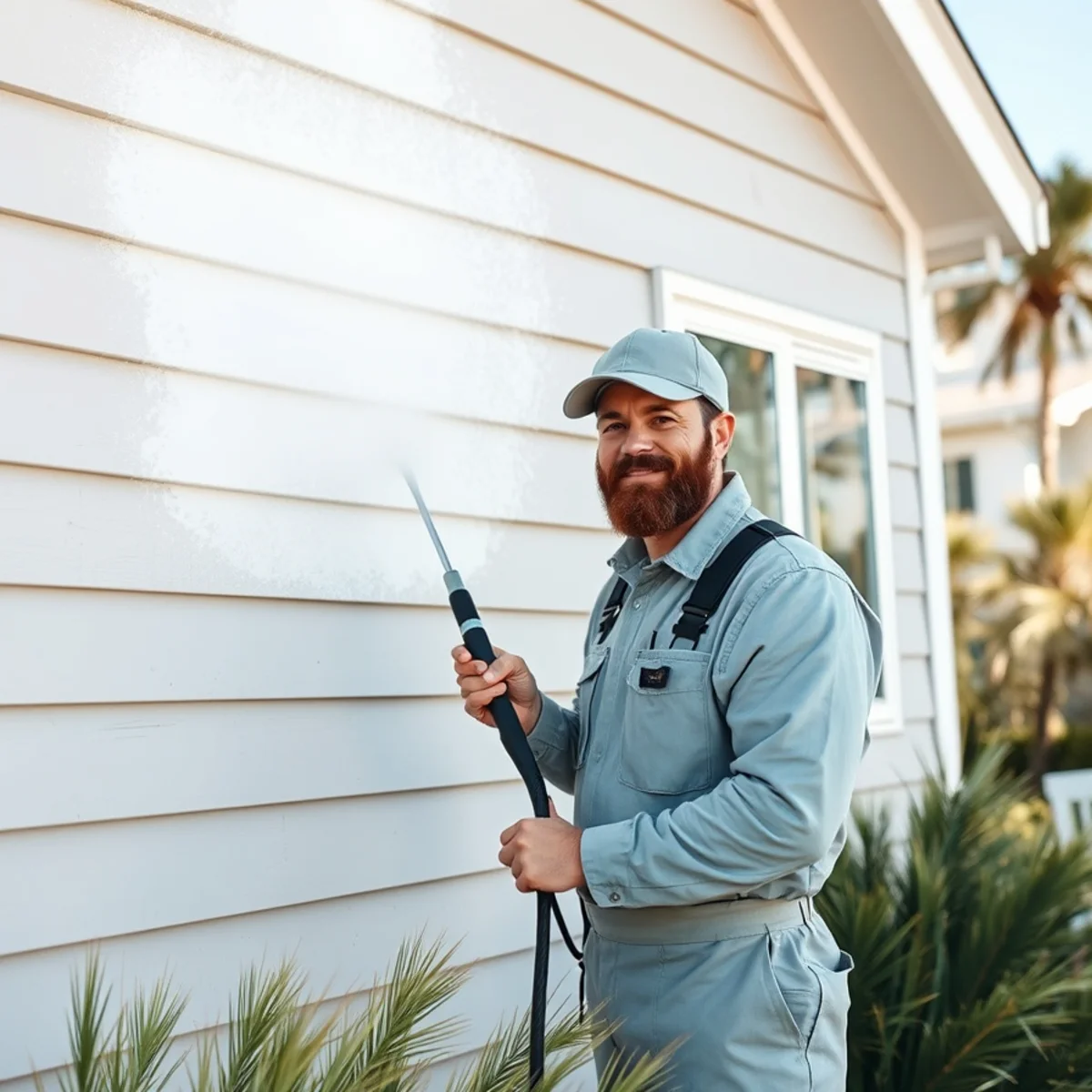
- Soft washing uses low pressure and specialized cleaners to kill algae and mildew at the root. It is the safe choice for siding, stucco, screens, and roofs, and it keeps growth from returning as fast.
- Higher pressure is reserved for hard, durable surfaces like concrete driveways, pavers, and masonry, where it clears embedded grime that a gentle wash cannot.
Knowing which to use, and dialing in the exact pressure and cleaner, is the difference between a clean home and an expensive repair. For a surface-by-surface schedule, see our guide on how often to pressure wash a beach house.
Surfaces that should never see high pressure
Some materials cannot take a hard stream no matter how tempting it is to blast them clean. Window and pool-cage screens will stretch or tear, dented siding will take on water behind the panels, older wood fences and decks will splinter, and a shingle roof will lose granules under high pressure. All of those get a low-pressure soft wash with a cleaner carrying a mildewcide and surfactant, which does the work chemically instead of forcing it. Matching the method to the material is the whole point, and it is the part a rushed operator skips.
Our pressure washing process
A safe, thorough wash is a sequence, not just a wand and a lot of pressure. Here is how we work:
- Walk the property. We identify each surface, note delicate landscaping, light fixtures, and screens, and pick the right method for every material.
- Protect what needs it. We wet down and cover plants, move what we can, and close up anything water should not reach.
- Pre-treat the growth. For organic staining we apply a cleaner with a mildewcide and surfactant that kills algae and mold at the root rather than just rinsing the surface.
- Wash by method. Delicate surfaces get a low-pressure soft wash; hard surfaces like concrete and pavers get controlled higher pressure, often with a flat-surface cleaner for even, stripe-free results.
- Rinse thoroughly. We rinse from the top down so no cleaner or debris streaks the finish, and re-rinse plants and hardscape when we are done.
- Seal or finish, if requested. Pavers and driveways can be sealed after they dry to slow regrowth and lock in the color.
- Final walk. We check every surface with you, or send photos if you are away, and hit anything we missed.
Why it matters more near the Gulf
Washing is not only about looks on 30A. Salt is corrosive and holds moisture against everything it settles on, which speeds up rot, rust, and finish failure. Mildew and algae dig into wood and concrete and trap dampness there. Rinsing that buildup off a few times a year genuinely extends the life of your siding, deck, and hardware. A clean exterior is also the required first step before painting; coatings will not bond over salt film and chalk, so a wash sets up our interior and exterior painting to last. Regular washing pairs naturally with clear gutter cleaning and repair, since overflowing gutters streak the very walls we just cleaned, and with deck, dock, and fence repair when the wood underneath needs attention. It all fits into the routine we lay out in our coastal home maintenance checklist.
What affects the cost of pressure washing
We quote by the property, not a one-size number, and a few factors set the price:
- Square footage. A short walkway is quick; a full driveway, deck, and house exterior is a bigger job.
- Surface type and method. Soft washing delicate siding takes more care and cleaner than blasting a concrete pad.
- Level of buildup. A yearly rinse is faster than lifting several seasons of thick algae and stains.
- Access and height. Second-story siding, steep lots, and tight side yards add setup time.
- Add-ons. Sealing pavers or a driveway after cleaning costs extra, but it keeps them looking clean longer.
We put those factors in front of you before we start, so the estimate is the number and not a starting point that creeps. A single driveway is a quick, affordable visit; a whole exterior with heavy soft washing, sealing, and second-story access sits higher because it is really several jobs bundled into one day. Either way, nothing gets added without your okay first.
Why 30A homeowners choose 30A Home Fixology
You get an honest estimate from a locally owned, licensed and insured crew that treats your property carefully, not a high-volume operation that blasts everything at full pressure and drives off. Jeff Rogers and his son run the jobs personally, and our 41 five-star Google reviews reflect the difference careful work makes. We understand coastal surfaces because we maintain them every week, so we know when soft washing protects your siding and when a screen or an old deck simply cannot take pressure. For second-home and rental owners, we can clean the property while you are away and send before-and-after photos so you see the result without being here. Our satisfaction guarantee holds either way; if something is not right, we come back and make it right.
Where we serve on 30A
We wash homes across Scenic 30A and South Walton, and up the coast beyond it, from Miramar Beach and the quiet western end at Dune Allen Beach to Destin, along with Santa Rosa Beach, Seagrove, and Grayton Beach. Every one of these towns sits close enough to the Gulf that salt film and coastal growth build year-round, so a regular wash pays off wherever you are on the coast.
Ready to see your driveway, deck, or siding look new again? Call 30A Home Fixology at (877) 753-5021 for a free pressure washing estimate. We will assess each surface, use the safe method for it, and leave your home looking sharp.