Most 30A beach houses need a full soft wash of the siding once a year, and twice a year if you sit on the Gulf front or a dune lake. Driveways, pool decks, and fences run on a similar yearly cycle, while shingle roofs get a low-pressure soft wash only every two to four years.
A beach house on 30A collects grime faster than a home even a few miles inland. Salt drifts in on the Gulf breeze and settles into a fine film on siding, glass, and railings. Add near-constant humidity, spring pollen, and the damp air that hangs over our coastal dune lakes, and you have ideal conditions for mildew, algae, and the green-black streaking that creeps across walls and pool decks. The real question is not whether your home needs washing, but how often, and which surfaces need a gentle touch instead of raw pressure.
After years of cleaning homes from the Gulf front back to the bay, here is the schedule we actually recommend, surface by surface.
Why 30A homes get dirty faster
Three forces work against your exterior out here. Salt is the big one. It is hygroscopic, which means it pulls moisture out of the air, so a salted surface stays damp longer and feeds mildew. Humidity is the second. When overnight dew sits on a shaded, north-facing wall that never sees full sun, algae takes hold within weeks. The third is organic debris: pollen, live-oak tannins, and leaf litter that stain the surface and feed whatever is already growing.
Your distance from the water matters, too. A Gulf-front home in Dune Allen Beach catches far more salt spray than a wooded lot set back near the bay. Rental-dense neighborhoods in Miramar Beach see heavy foot traffic that grinds sunscreen and grit into pavers and pool decks. Set your washing calendar to match your exposure, not a generic national average.
Signs your beach house is overdue for a wash
You do not need a calendar to know when it is time. The house tells you. Walk the exterior and look for these:
- Green or black streaking down the siding, worst on shaded, north-facing walls.
- A pool deck, lanai, or walkway that has turned slick underfoot.
- Chalky, dull paint, or a gritty salt film you can wipe off the glass and railings.
- Dark stains or spotting spreading across the roof shingles.
- Black mildew creeping into the soffit corners and under the eaves.
Catch these early and a routine wash clears them. Let them sit and the growth roots deeper into the surface, which takes stronger cleaning and shortens the life of your paint and sealer.
A washing schedule by surface
Siding and painted exterior: once a year
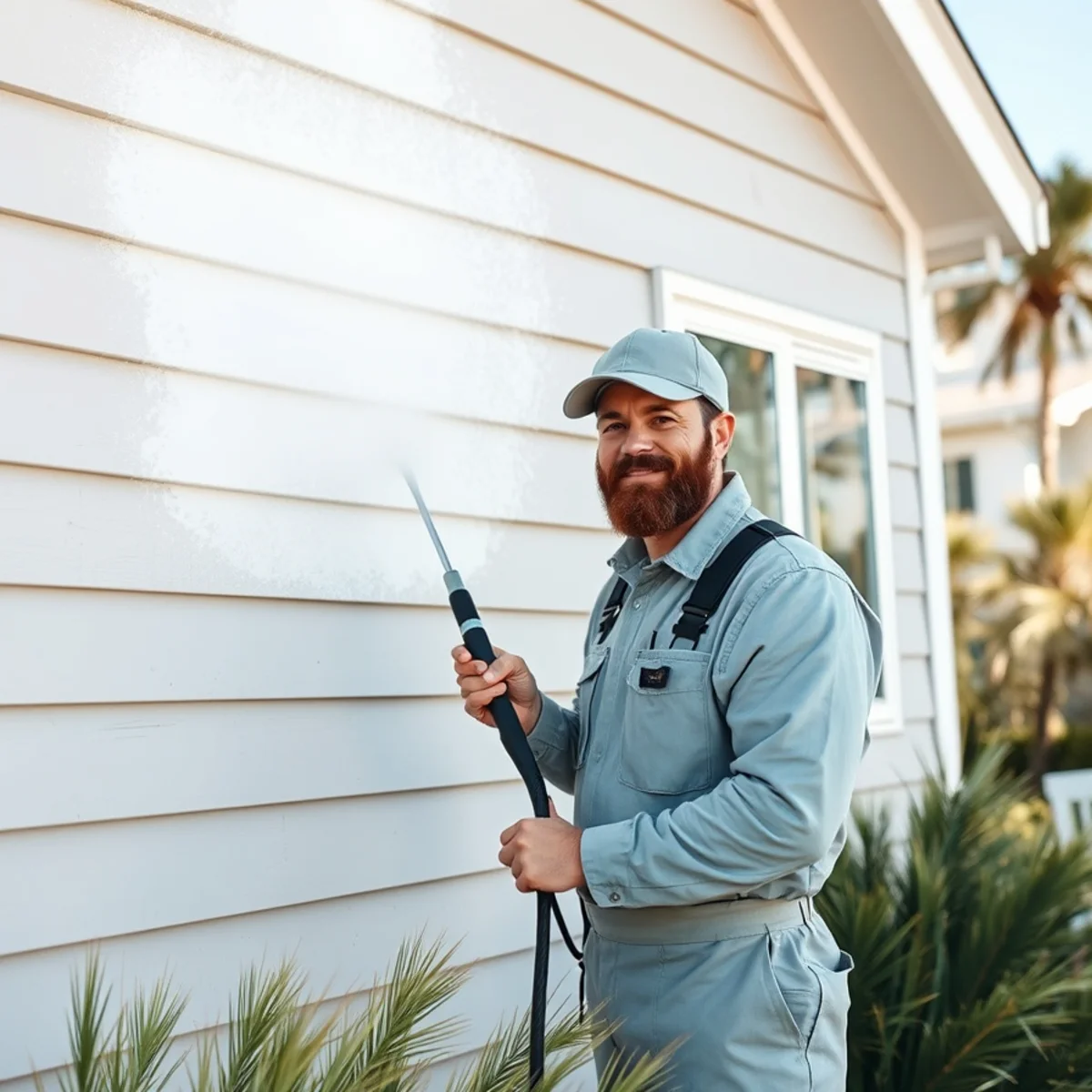
Plan on a full house wash once a year, and twice a year for homes directly on the Gulf or on a dune lake. This should be a soft wash, not a high-pressure blast. We use low pressure and a cleaning solution that kills mildew and algae at the root, then rinse it clean. High pressure on siding, especially fiber-cement board, wood, or stucco, can drive water behind the panels, strip paint, and etch the surface. A yearly soft wash also protects your paint, so exterior coatings last their full life instead of failing early.
Driveways, walkways, and pavers: once a year
Concrete and paver surfaces take more pressure, so these get a true pressure wash, usually with a flat-surface cleaner that leaves no zebra striping. Paver joints on 30A often need fresh polymeric sand afterward, and many driveways benefit from a new coat of sealer every couple of years to slow salt intrusion and weed growth between the stones. If you see a white, powdery haze on concrete or pavers, that is efflorescence, mineral salt wicking up to the surface, and it calls for the right cleaner rather than more pressure.
Pool decks and lanais: once or twice a year
Pool decks stay wet, collect sunscreen and salt, and turn slick with algae quickly. Travertine and marble, both common around 30A pools, must be cleaned at low pressure with a stone-safe product, because high pressure pits and dulls natural stone permanently. For a busy rental, twice a year keeps the deck safe underfoot and sharp in listing photos, and it pairs naturally with the turnover work in our vacation rental maintenance.
Fences and gates: once a year
Wood fences gray out and grow mildew on the shaded side. A gentle wash brightens the wood and preps it for sealing. While we are on site, we flag loose boards, popped fasteners, and sagging gates, the kind of wear our deck, dock, and fence repair work sets right before it turns into a bigger job.
Roofs: only as needed, and soft wash only
Those dark streaks on a shingle roof are a hardy algae that thrives in humid coastal air. Never let anyone put high pressure on a roof. It strips the protective granules off asphalt shingles and voids most manufacturer warranties. The correct method is a low-pressure soft wash with a solution that kills the growth and lifts the staining. Most 30A roofs need this every two to four years, sooner if you sit under pines or live oaks.
Pressure wash or soft wash: know the difference
The terms get used interchangeably, but they are not the same. A pressure wash uses mechanical force and suits hard, flat masonry like concrete and pavers. A soft wash uses cleaning chemistry and low pressure to do the work, and it is the right call for anything porous, coated, or fragile: siding, stucco, wood, screens, and roofs. The soft-wash solution is a measured mix of a mildewcide and a surfactant that clings to the surface, kills the algae and mildew at the root, then rinses away, so the result lasts far longer than blasting the green off with water alone. Matching the method to the surface is the single biggest thing that separates a clean, undamaged home from an expensive mistake. Our pressure washing and soft washing service uses whichever the surface calls for.
What your HOA expects
Many 30A communities hold owners to a visible cleanliness standard, and some are strict about it. The white stucco of Alys Beach, the tidy streets of WaterColor and Rosemary Beach, and most rental-managed neighborhoods expect exteriors to stay free of obvious mildew and algae. Owners who let it slide can receive a compliance notice. Staying on a yearly schedule keeps you ahead of a violation letter and keeps a rental photogenic for every guest who books it.
Washing day is a good time to catch small problems
A thorough wash exposes the things you stop noticing. We often spot clogged gutters spilling down a wall, which is why homeowners frequently pair a wash with gutter cleaning in the same visit. We also catch failing caulk, rust bleeding from a fastener, or a soft spot in a deck board, all cheaper to fix early. For a fuller picture of staying ahead of coastal wear, our guide to salt-air home maintenance pairs well with a washing routine.
Keeping a beach house clean here is less about looks and more about protection. Salt and mildew that sit on a surface shorten the life of paint, wood, and stone, so a simple, consistent schedule is the cheapest maintenance you can buy. If you want a straight answer on how often your specific home needs washing, call 30A Home Fixology at (877) 753-5021 for a free estimate, and we will build a plan around your exposure and your surfaces.