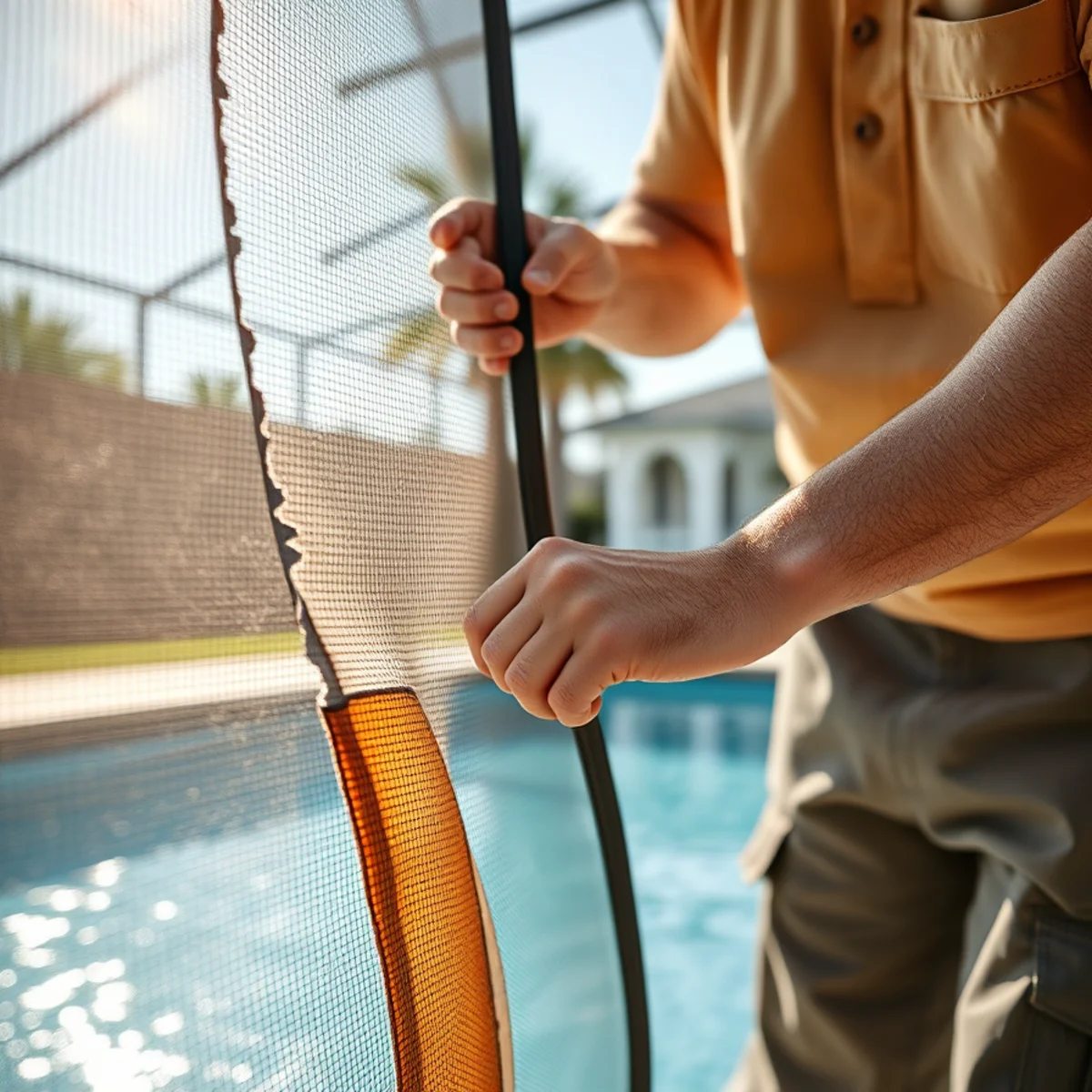
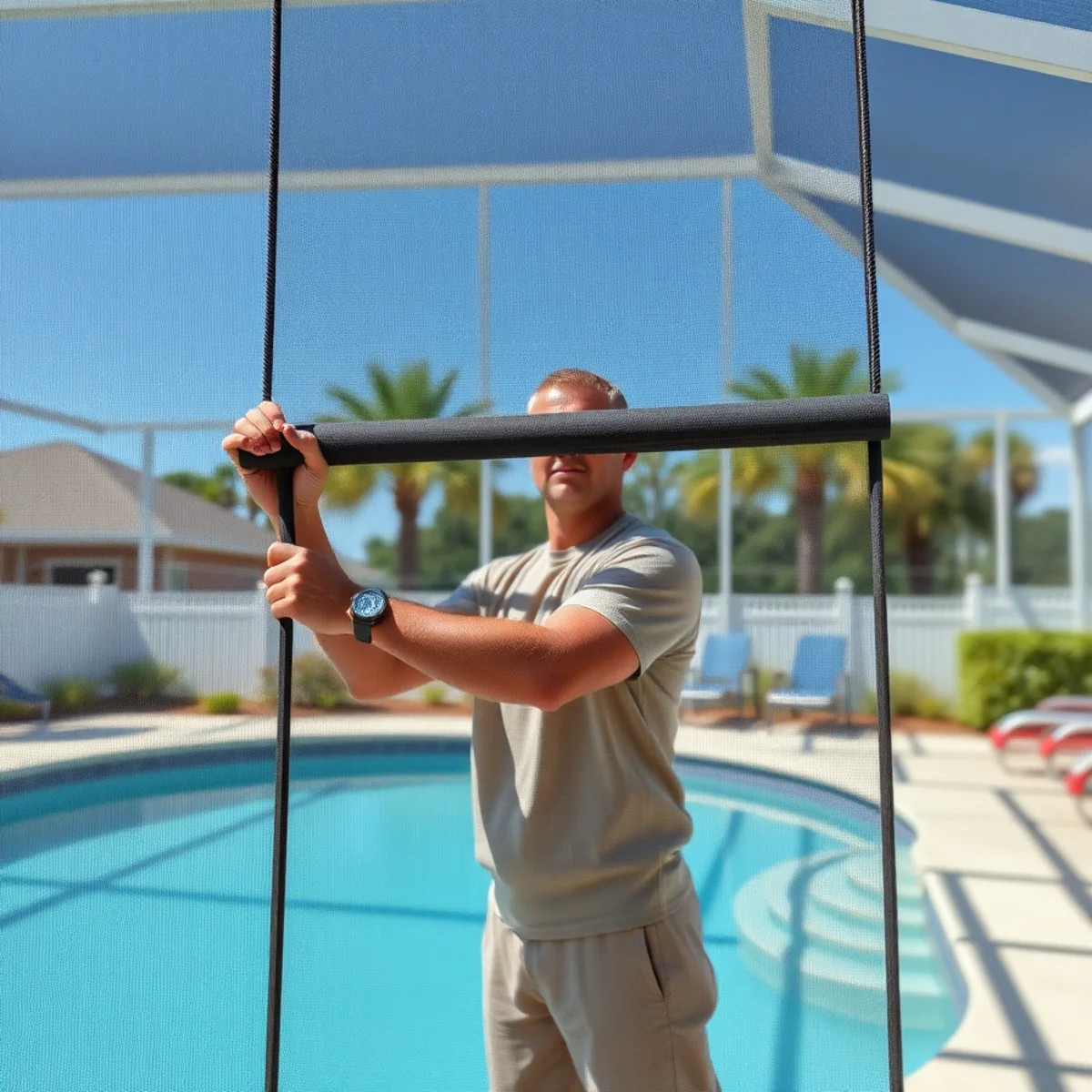
A pool cage or lanai screen has one job: keep the bugs, leaves, and glare out while the Gulf breeze comes through. One torn panel and that job is over, because the no-see-ums find the gap by the first evening. 30A Home Fixology handles screen enclosure repair in Santa Rosa Beach and across 30A, from a single popped panel to a whole pool cage that has taken a storm, and we help you decide when a patch is enough and when it is time to re-screen. We are locally owned, licensed and insured, and we will never sell you a full re-screen when a fresh spline and one panel will do.
Signs your enclosure needs attention
A screen enclosure tells you it is failing well before it falls apart. Call us when you spot:
- A tear, hole, or puncture in any panel. One gap is all a no-see-um needs, so even a small rip is worth fixing fast.
- Screen that billows, sags, or has pulled loose from the frame. Usually dried-out spline letting go, an easy fix when it is caught early.
- Mesh that looks chalky, faded, or brittle. Sun-worn fiberglass that tears at a touch is near the end of its life.
- A screen door that will not latch, drags, or bangs. Worn closers, dropped hinges, and racked frames.
- Rust streaks or loose fasteners on the frame. Corroded screws let corners separate and the whole cage rack out of square.
- Panels blown out or framing bent after a storm. Common on the coast, and usually very repairable.
What we repair
Screen enclosures fail in a handful of predictable ways on the coast, and we fix all of them:
- Torn and stretched panels. Punctures from branches, pool toys, and pets, plus the slow sag of sun-worn mesh that no longer sits tight.
- Popped spline. The rubber cord that locks screen into the frame dries out in the heat and works loose, letting whole panels billow and pull free. Re-splining is often all a panel needs.
- Sagging and rusted frames. Loose fasteners, separated corners, and corroded screws that let a frame rack out of square.
- Failed hardware and doors. Screen doors that will not latch, dragging hinges, and broken closers on the cage entry.
- Storm damage. Panels blown out, framing bent, and debris tears after a Gulf blow.
Patch or full re-screen?
One torn panel does not always mean re-screening the whole cage, and we will not sell you more than you need. If the surrounding mesh is still tight and the frame is sound, we re-screen the single affected panel or simply re-spline it, and you are done for a fraction of the cost. When the screen is brittle and sagging across the whole structure, usually after years of Gulf sun, piecemeal patches stop making sense and a full re-screen becomes the better value, because the next panel is always about to go. We walk you through how to tell the difference in our guide to patching versus re-screening a pool cage.
Choosing the right screen
The mesh matters as much as the repair. We help you pick for how you actually use the space:
- Standard fiberglass mesh. The everyday choice, with good airflow, good visibility, and easy replacement.
- No-see-um mesh. A tighter weave that stops the tiny biting midges this coast is famous for. It trades a little airflow for far fewer bites on a summer evening, and it earns its keep near the dune lakes and marshes.
- Pet-resistant screen. Heavy, tear-tough mesh for the lower panels where dogs and cats push, lean, and claw. Running it along just the bottom row saves the whole panel from a nightly beating.
- Super-screen and heavy-duty mesh. A thicker, tear-resistant polyester weave that shrugs off wind, branches, and the odd elbow. It is a smart choice for big pool-cage panels and the high-traffic openings that take the most abuse.
On tall enclosures, a common move is heavier mesh below the chair rail where people and pets make contact, and standard fiberglass up high where you want the airflow and the view. We will lay out the tradeoffs so you spend on the panels that need it.
How a screen repair goes
Whether it is one panel or a whole cage, we work the same careful way:
- We look and give you a straight estimate. We check the mesh, the spline, the frame, and the hardware, then tell you honestly whether it is a patch, a few panels, or a full re-screen, with the price in writing.
- You pick the mesh. Standard fiberglass, tighter no-see-um mesh, heavy pet-resistant screen, or super-screen, matched to how you use the space.
- We remove the old screen and spline. Out with the torn mesh and the dried, brittle spline that let it go in the first place.
- We re-screen tight and true. New mesh rolled in with fresh spline for a drum-tight panel, and corroded fasteners swapped for corrosion-resistant hardware while we are in there.
- We test and clean up. Doors latch, panels are tight, the area is left clean, and remote owners get photos of the finished cage.
Why coastal cages wear out faster
Salt air is hard on aluminum framing and brutal on fasteners. The screws and hardware that hold a cage together corrode from the inside, and once a few let go the frame begins to rack and the spline follows. When we re-screen, we replace rusted fasteners with corrosion-resistant, often stainless, hardware and check the frame's anchoring while we are in there, so the repair actually lasts. Regular rinsing and a yearly look-over go a long way, and we fold enclosures into the bigger routine in our coastal home maintenance checklist. We do plenty of this work on the pool-heavy streets around Seacrest Beach and among the newer builds near Inlet Beach, where a cage or lanai is part of nearly every home.
Screens, doors, and storm season
Screen work rarely travels alone. The same salt and sun that tear a pool cage also chew up window screens and slider tracks, which is door and window repair territory, and a wobbly cage often shares its footing with a tired deck or fence we can shore up on the same visit. Because a screen enclosure is one of the first things high wind takes apart, it is worth tying into your storm prep and hurricane readiness plan. A cage checked and re-splined before June holds up far better when the weather turns.
What affects the cost
Screen repair is usually priced per panel or by the job, with a written estimate before we start. What moves it:
- How many panels. One re-splined panel is a quick, low-cost fix. A full cage re-screen is a larger job priced by the number and size of panels.
- Mesh type. Standard fiberglass costs less than no-see-um, pet-resistant, or super-screen, which use pricier material.
- Height and access. Tall two-story pool-cage panels and steep roofs take more time and equipment than a ground-level lanai.
- Frame condition. Replacing corroded hardware or re-squaring a racked frame before re-screening adds to the labor.
Why 30A homeowners call us for screen work
We are a locally owned, family-run crew, not a franchise. Owner Jeff Rogers works with his son and a small team, and the same people who quote your cage are the ones who re-screen it. 30A homeowners and rental owners have left us 41 five-star Google reviews, plenty of them for screen and enclosure work.
- Licensed and insured. Covered on tall pool-cage panels and two-story work, with no cutting corners.
- Honest recommendations. We patch or re-spline when that is all you need, and only suggest a full re-screen when the mesh is genuinely done.
- Coastal materials. We swap rusted fasteners for corrosion-resistant hardware so the repair actually lasts in salt air.
- Remote-owner friendly. Photo updates and text approvals mean second-home and rental owners never have to be on-site.
- Our guarantee. If it is not right, we come back and make it right.
Screen repair across 30A and beyond
We repair and re-screen enclosures up and down the coast, from the pool-heavy east end to the resort neighborhoods west of the pass. That includes the cages and lanais of Miramar Beach, the courtyard pools of Rosemary Beach, and the newer homes around WaterSound, along with Seacrest Beach, Inlet Beach, Seagrove, and Santa Rosa Beach. If your enclosure is on 30A or nearby, we can get it tight and bug-free again.
Get your pool cage or lanai bug-free and tight again before the next warm evening. Call or text 30A Home Fixology at (877) 753-5021 for a free estimate, and we will tell you honestly whether it needs a patch or a full re-screen.