Deck maintenance on the Emerald Coast comes down to a yearly rhythm: rinse salt off after storms, wash the wood once a year, inspect the ledger, fasteners, and railings, and re-coat on a schedule set by your finish. Use 316 marine-grade stainless fasteners, and address soft boards early before rot spreads.
Wood takes a beating on the Emerald Coast. Intense Gulf sun bleaches and cracks the surface, salt air corrodes the fasteners holding everything together, and near-constant humidity feeds rot and mildew. A deck or dock here needs more attention than the same structure would inland, but the work is straightforward once you know the rhythm. Stay ahead of it and your boards last for decades. Fall behind and small problems spread fast.
Here is how we keep decks and docks solid on 30A, from the first inspection to the final coat.
Start with an honest inspection
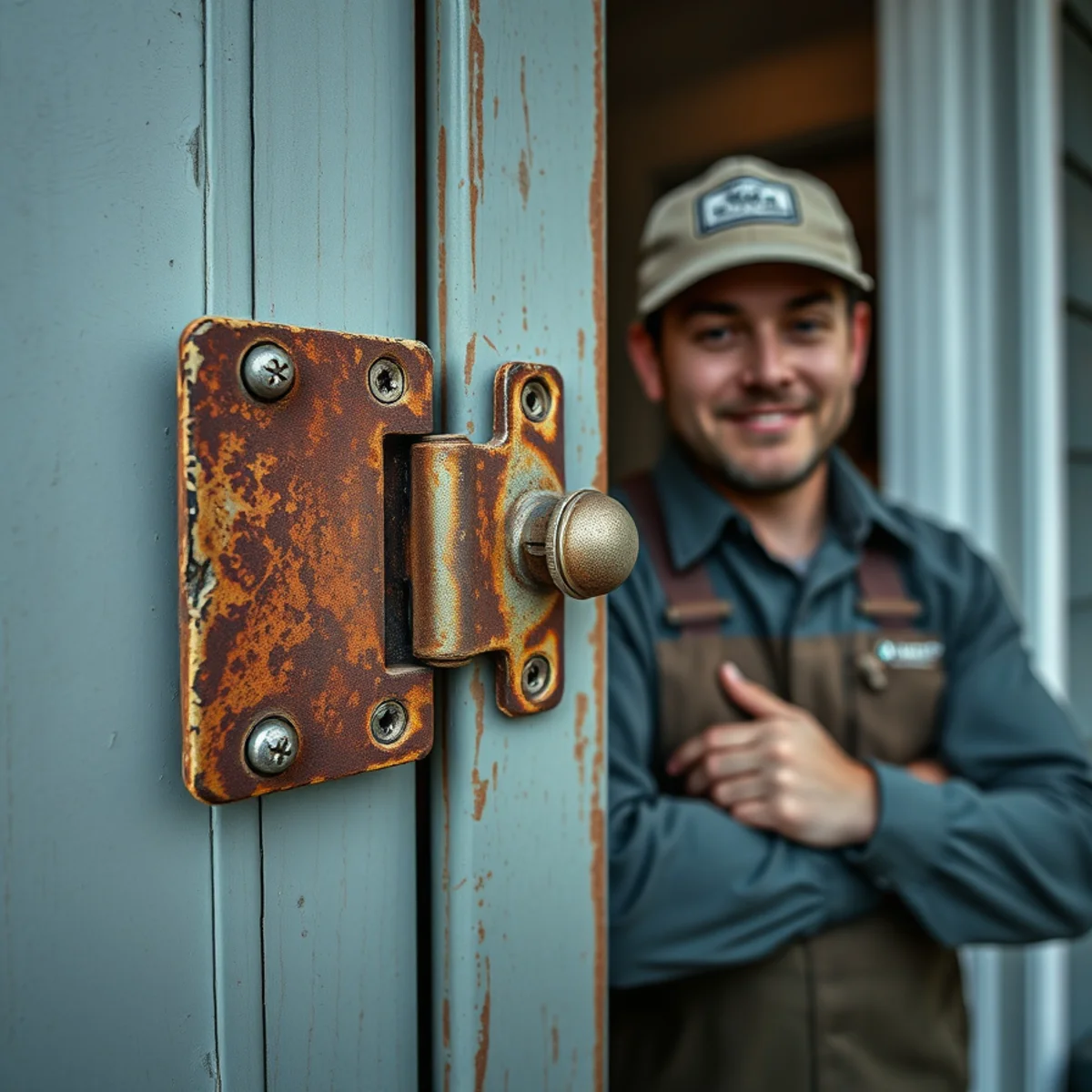
Every job starts on our knees with a screwdriver. We probe for soft, punky wood around ledger boards, post bases, and anywhere water tends to sit. We check the ledger connection to the house, since a failed ledger is the most dangerous thing on any deck. We look over railings and stairs, and on docks we check the pilings and the frame right at the waterline. On the coast, the fasteners tell the story: rust streaks bleeding from a screw head mean corrosion is already working from the inside out.
Clean before you coat
Finish only sticks to clean, sound wood. We clear the growth, graying, and salt film with a wash matched to the wood, usually a gentle approach, since too much pressure fuzzes the grain and gouges the soft summerwood. Our pressure washing and soft washing crew uses the right tip and a wood-safe cleaner, then lets the boards dry fully, often two or three sunny days, before any product goes down. Coating damp coastal wood traps moisture and guarantees peeling.
Seal or stain: which does your wood need
Both protect wood, but they do different jobs.
Clear and lightly tinted sealers
A sealer repels water and slows checking while letting the grain show. It gives the least UV protection, though, so on a sun-blasted 30A deck a clear finish can fade and fail within a year. It suits newer wood you want to show off, as long as you accept re-coating often.
Semi-transparent and solid stains
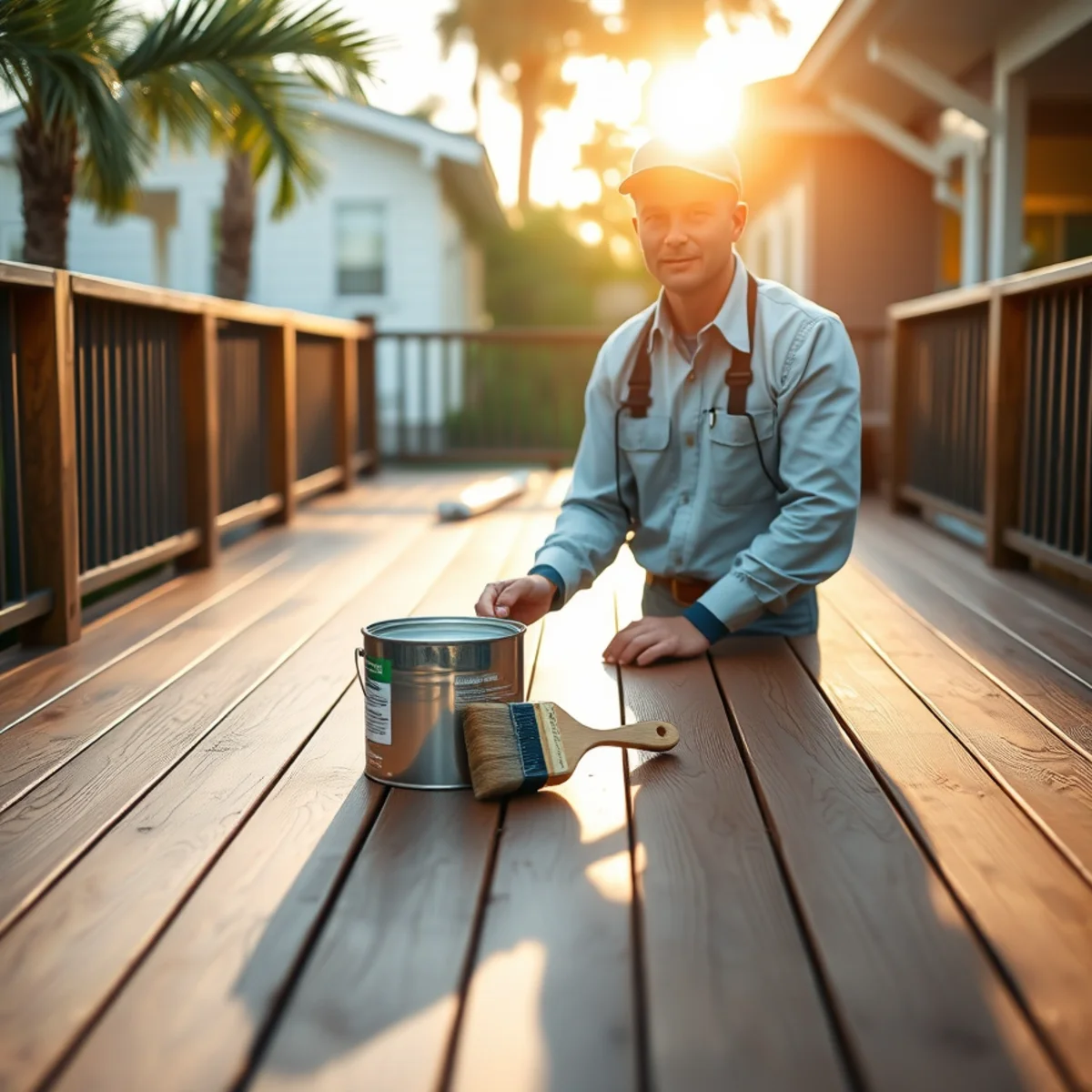
Pigment is what blocks UV, and UV is the real enemy out here. A semi-transparent stain adds color and genuine sun protection while still showing grain, and it is the sweet spot for most coastal decks. A solid stain protects the longest and hides age, but it sits more like paint and can peel if water works underneath it. For handrails and pergolas that catch brutal all-day sun, an exterior coating in a solid stain or paint often holds up best.
A deck refresh, step by step
Once you have picked a finish, the order of the work decides how long it lasts. Rushing any step is how a fresh coat ends up peeling by the next summer. Our sequence:
- Clear the deck, sweep the debris out of the gaps between boards, and protect the surrounding plants and siding.
- Wash with a wood-safe cleaner at low pressure to lift graying, mildew, and salt film without fuzzing the grain.
- Let the boards dry fully, usually two or three sunny days, and check with a moisture read before anything goes down.
- Make repairs, reset or replace popped fasteners, and lightly sand raised grain or splinters.
- Apply the stain or sealer in thin, even coats, working with the grain and wiping back the excess so it penetrates instead of skinning over.
Fasteners: the coastal weak point
This is where inland advice fails you. Ordinary galvanized screws and nails corrode in salt air, and modern pressure-treated lumber speeds it along, because its copper-based preservative reacts with plain steel and zinc. On the coast the standard is 316 marine-grade stainless steel for fasteners and connectors, or at minimum hot-dipped galvanized hardware rated for treated lumber. When we replace boards or rebuild a section, we upgrade the fasteners, because a beautiful board held by a rusting screw is a callback waiting to happen. Backing-out fasteners and mushy board ends are the top reasons homeowners call us for deck, dock, and fence repair.
Protect the wood you cannot see
The parts that fail first are the parts you never look at. The top edge of every joist and the ledger sit under the decking where water pools and lingers, and that is where rot quietly starts on a coastal deck. When we open up a section or build new, we run a self-adhesive flashing tape, often sold as joist tape, along the joist tops and over the ledger so water sheds off the framing instead of soaking into it. On the walking surface we can set boards with a hidden fastener system that clips into the side of each board, leaving no screw heads on top to rust, streak, or catch a bare foot. It is a small upgrade that keeps the structure sound long after the finish needs a refresh, and it is part of the same salt-driven battle our salt-air home maintenance guide lays out for the whole house.
Replacing boards the right way
You rarely need a whole new deck. More often it is a handful of boards over a wet spot, or a few tired stair treads. We match the replacement lumber, let new pressure-treated boards acclimate and dry before staining so they do not shrink and gap later, space them consistently for drainage and airflow, and set the fasteners just below the surface. Done well, a board swap disappears into the deck.
Docks have their own problems
On the dune lakes around Dune Allen Beach and the bayfront near Point Washington, docks live in a harder environment than any deck. The waterline zone stays wet and rots first. Brackish dune-lake and bay water corrodes hardware even faster than rain and spray. We check pilings for movement and marine borers, inspect the frame where it meets the water, and keep decking boards fastened tight so nothing works loose over a season of boat traffic and afternoon storms. Stainless hardware is not optional out over the water.
A realistic Gulf-climate cadence
- Rinse salt and debris off a few times a year, especially after storms.
- Wash thoroughly once a year.
- Inspect fasteners, the ledger, railings, and pilings once a year.
- Re-coat a clear sealer yearly, a semi-transparent stain every two to three years, and a solid stain when it starts to wear at high-traffic spots.
- Address soft boards and rusting fasteners as soon as you spot them, before rot spreads into the frame.
Coastal wood rewards a little regular attention and punishes neglect quickly. A clean, well-sealed deck with sound fasteners is a safe deck, and it costs a fraction of a rebuild. For where deck care fits in the bigger picture, our coastal home maintenance checklist lays out the full year. To get your deck or dock inspected, cleaned, and coated before the next hard season, call 30A Home Fixology at (877) 753-5021 for a free estimate.